Commercial Vehicle Wraps: Full vs. Partial Performance Guide
Commercial Vehicle Wraps: Full vs. Partial Performance Guide
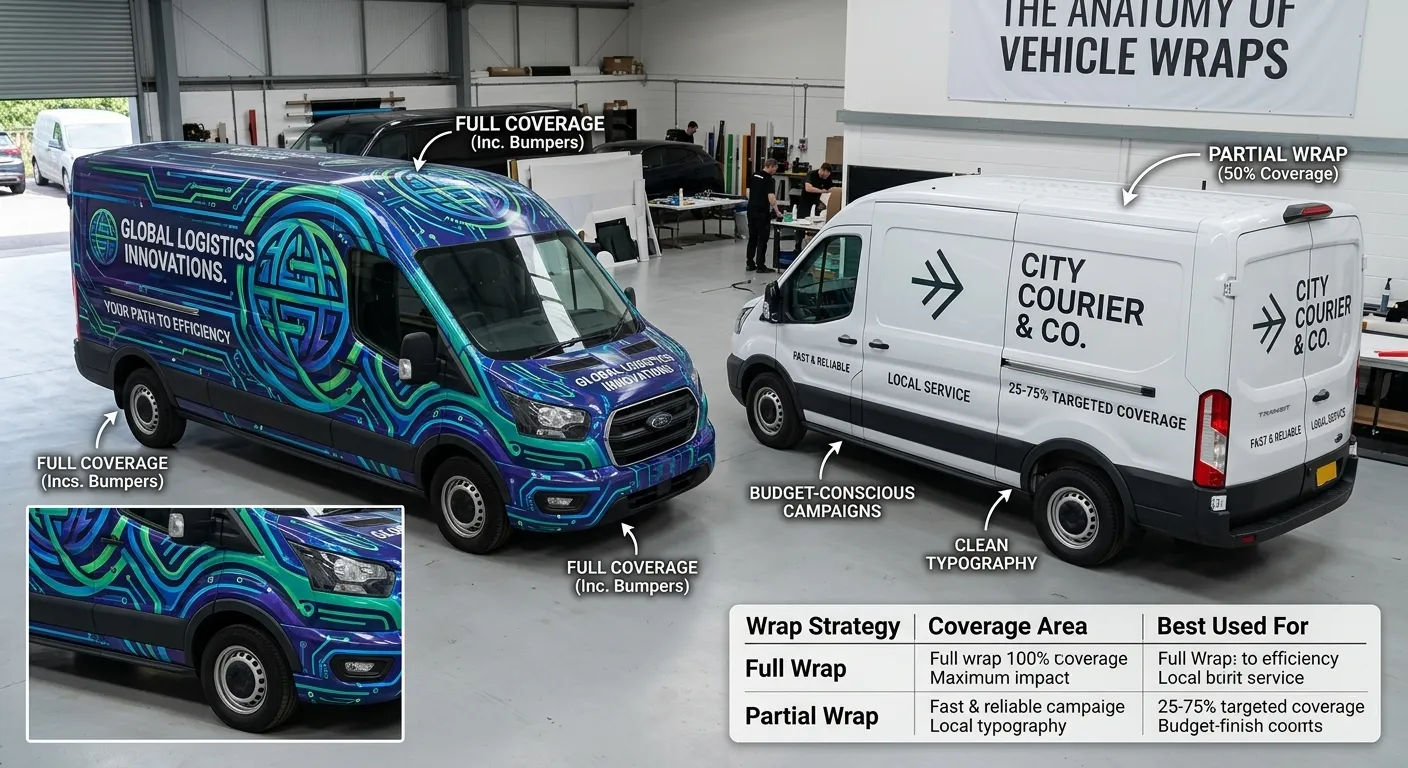
As a professional automotive wrap blogger who has spent years tracking mobile advertising trends, I am constantly asked one foundational question by business owners looking into commercial vehicle wraps: “Should I go all out, or keep it targeted?” Deciding between a full wrap and a partial wrap is the most critical choice you will make when designing your fleet graphics. Both strategies offer an incredible return on investment (ROI), but the right choice depends entirely on your vehicle’s body shape, your brand identity, and your marketing budget. In this case study, we will break down the real-world performance of both options to help you determine which format will work best for your business.
The Anatomy of Commercial Vehicle Wraps
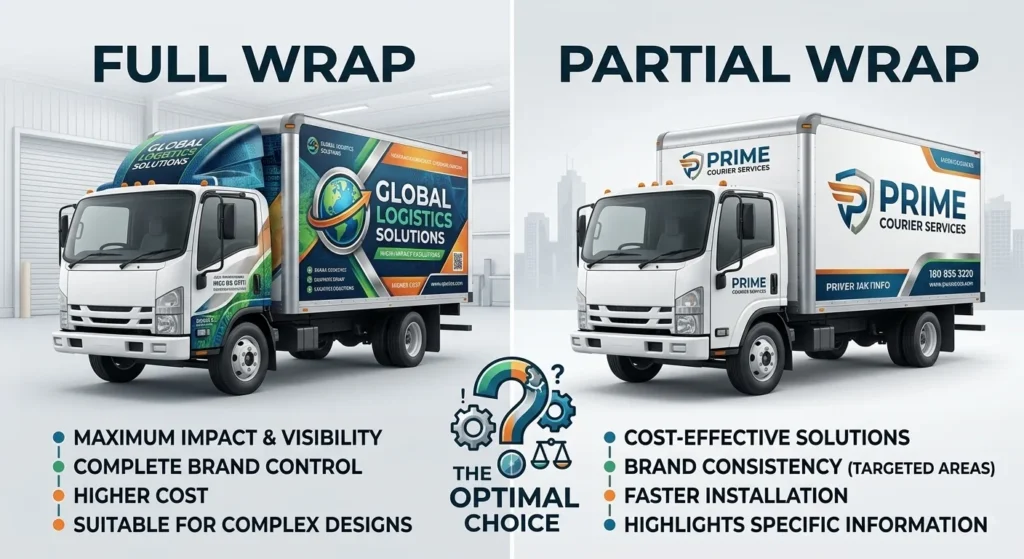
Before diving into the performance data, let’s clarify exactly what we are comparing. While both options utilize premium, weather-resistant vinyl casting film, they occupy very different physical footprints on a vehicle. For a deeper look at the raw materials used, check out the industry standards on 3M Commercial Graphics.
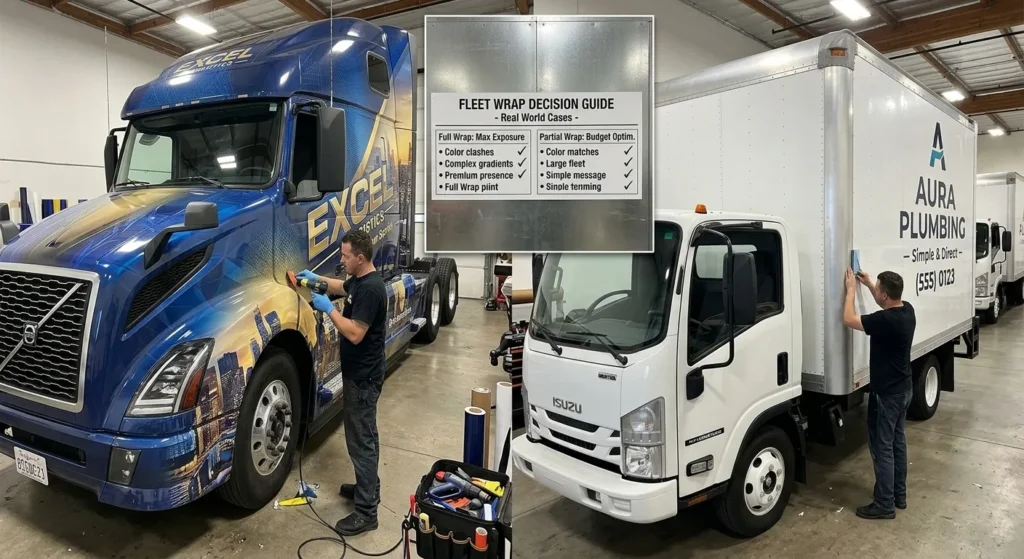
| Wrap Strategy | Coverage Area | Best Used For |
| Full Wrap | 100% of the painted surfaces (including bumpers and sometimes roofs). | Maximum visual impact, complex graphics, brand transformations. |
| Partial Wrap | 25% to 75% of the vehicle (usually doors, quarter panels, and the rear). | Budget-conscious campaigns, clean typography, minimalist layouts. |
Case Study 1: The Power of a Full Commercial Vehicle Wrap
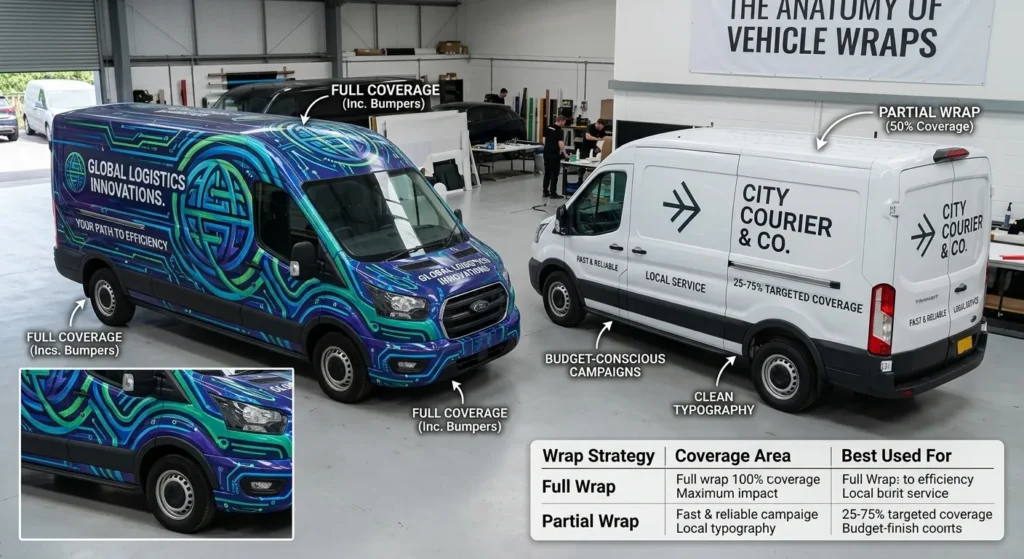
When a luxury mobile catering client approached us to design their mobile kitchen graphics, they needed a total brand transformation. They wanted a high-end, matte black background with intricate ghost patterns and shimmering gold gradient linework.
[Vehicle Surface] ──> 100% Seamless Vinyl Layer ──> Total Visual Domination
Why it Worked:
For this level of sophistication, full commercial vehicle wraps are the only viable option. Because the design relied on a dark, textured background texture, utilizing a partial layout would have left the vehicle’s original factory paint exposed, completely breaking the high-end luxury illusion.
- Seamless Aesthetics: The vinyl flowed flawlessly over rivets, windows, door handles, and tail-light housings, making the trailer look like a custom, factory-painted masterpiece.
- Message Retention: Because the entire vehicle acted as a unified canvas, the advertisement was highly legible from hundreds of feet away on the highway.
(Suggestion: Insert Image 1 here – Alt Text: Premium gold and black commercial vehicle wraps on a food trailer)
Case Study 2: The Efficiency of Partial Commercial Vehicle Wraps
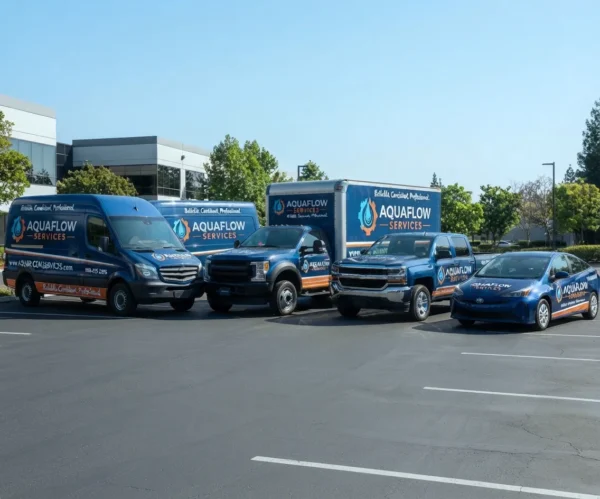
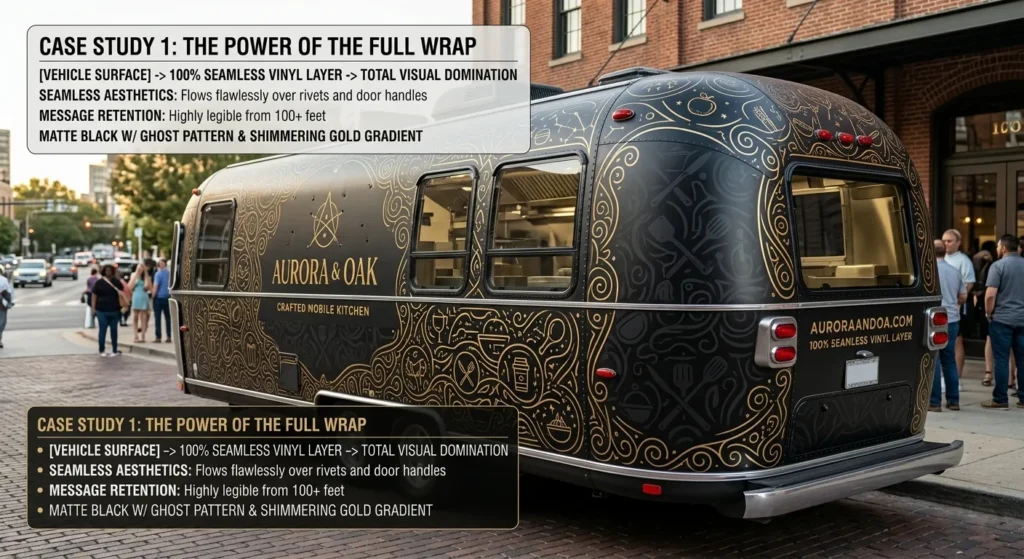
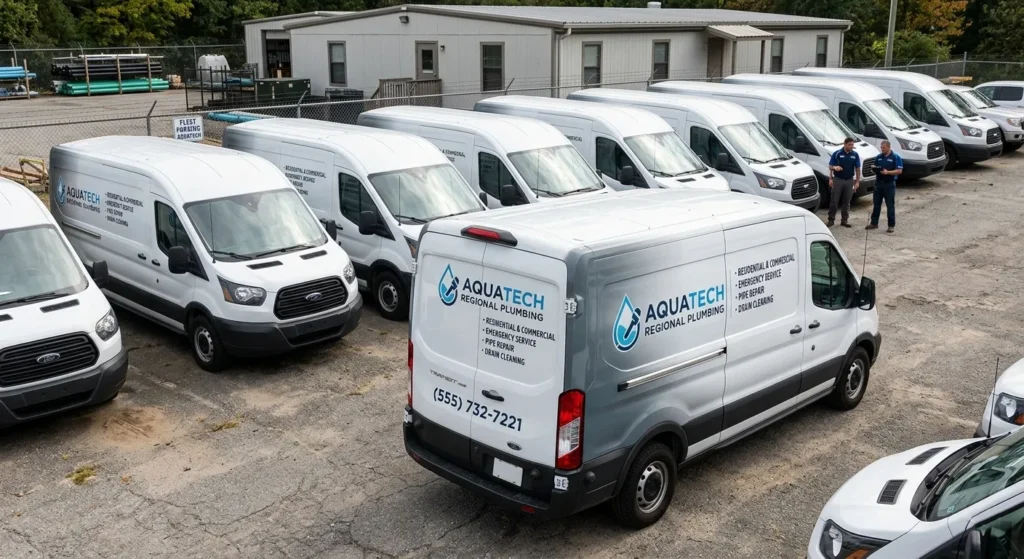
On the other side of the spectrum, we worked with a regional plumbing fleet operating thirty white transit vans. They needed to display their logo, a quick list of services, and a phone number across their entire fleet without breaking the bank.
Instead of covering the entire fleet in vinyl, we designed a strategic partial option that covered roughly 60% of the vans—specifically the rear doors and the side panels.
Why it Worked:
Because the client’s fleet vehicles were already factory-painted white, we used the original paint as our background color. We designed the graphics to seamlessly fade into the white paint, creating the illusion of a much larger, more expensive advertisement. According to fleet marketing studies by the Outdoor Advertising Association of America (OAAA), mobile impressions are among the most cost-effective forms of local media.
- Cost Efficiency: Opting for a partial layout allowed the client to stretch their budget across all thirty vehicles instead of only fully wrapping fifteen of them.
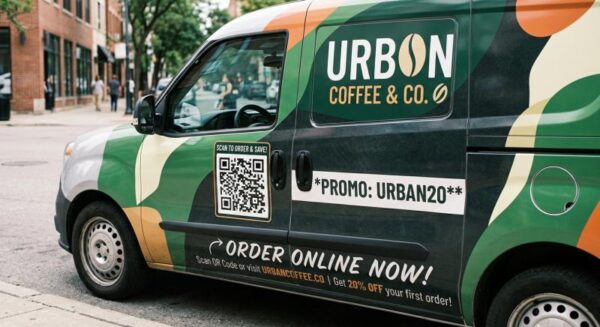
- Hyper-Focused Messaging: Without background graphics competing for attention, the phone number and company logo stood out with razor-sharp clarity.
(Suggestion: Insert Image 2 here – Alt Text: Fleet of white transit vans utilizing partial commercial vehicle wraps)
Installation & Surface Challenges for Fleet Graphics
From an installer’s perspective, choosing between different styles of commercial vehicle wraps presents unique challenges on the shop floor.
The Installation Factor: A full wrap requires master-level installation because the vinyl must stretch and conform perfectly around complex contours, door handles, and body lines without bubbling or lifting over time. Conversely, a partial wrap requires absolute precision in alignment and panel-transitioning, as the edge of the vinyl is visible and must blend cleanly into the vehicle’s natural body lines.
Decision Matrix: Choosing Your Commercial Vehicle Wraps
If you are still torn between the two options, use this quick checklist to guide your next fleet branding project:
Choose a Full Wrap if:
- Your vehicle’s factory paint color clashes heavily with your corporate brand colors.
- You want to display complex graphic gradients, photographic elements, or full-bleed patterns.
- Your goal is maximum brand awareness and a premium, luxury street presence.
Choose a Partial Wrap if:
- Your vehicle’s factory paint matches or complements your logo and brand guidelines perfectly.
- You are managing a large fleet and need to maximize your budget-per-vehicle.
- Your advertising message is simple, direct, and text-heavy.
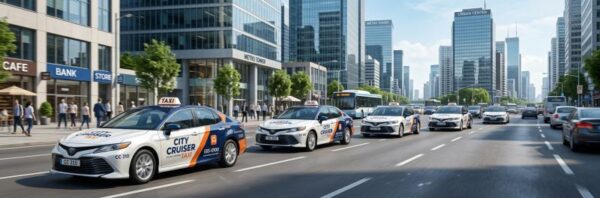
Both mobile advertising strategies are highly effective ways to turn your company fleet into 24/7 rolling billboards. By matching the scale of your commercial vehicle wraps to your vehicle’s natural lines and your business goals, you ensure your brand gets noticed exactly the way it deserves.