Investing in fleet vehicle wraps can be an effective way to improve brand visibility, but the first question most fleet owners ask is simple: how much should I budget for a fleet wrap project?
The total cost of commercial vehicle wraps depends on several factors, including vehicle size, wrap coverage, material selection, design requirements, and installation. Having a clear budget before starting helps you choose the right solution for your business without paying for features you do not need.
This guide explains the main factors that affect fleet graphics cost, how to estimate your budget, and practical ways to reduce expenses while achieving professional results.
How Much Do Fleet Wraps Cost?
There is no single price for fleet wraps because every project is different. A small company van with a partial wrap requires a very different investment compared with a full wrap on multiple large trucks.
Typical factors that influence car wrap pricing include:
- Vehicle size and shape
- Full wrap vs partial wrap coverage
- Number of vehicles in the fleet
- Design complexity
- Vinyl material quality
- Installation requirements
Most businesses calculate the cost per vehicle. Smaller vehicles, such as service vans or business cars, generally cost less, while larger vehicles, such as box trucks, trailers, and specialty vehicles, require more material and labor.
When planning your budget, it is better to focus on the total project cost rather than only the price per vehicle. A fleet of 10 vehicles may have different pricing compared with wrapping just one vehicle.
What Factors Affect Fleet Wrap Pricing?
Vehicle Size and Type
The size of your vehicle is one of the biggest cost factors.
A compact company car requires less vinyl material and installation time than a large commercial truck. Vehicles with complex curves, handles, mirrors, or body features may also require additional installation work.
Common examples include:
- Business cars
- Service vans
- Delivery vans
- Pickup trucks
- Box trucks
- Trailers
Before requesting a quote, provide accurate vehicle models and quantities. This helps wrap providers estimate material usage and labor requirements more accurately.
Wrap Coverage: Full Wrap vs Partial Wrap
Your coverage choice has a major impact on your budget.
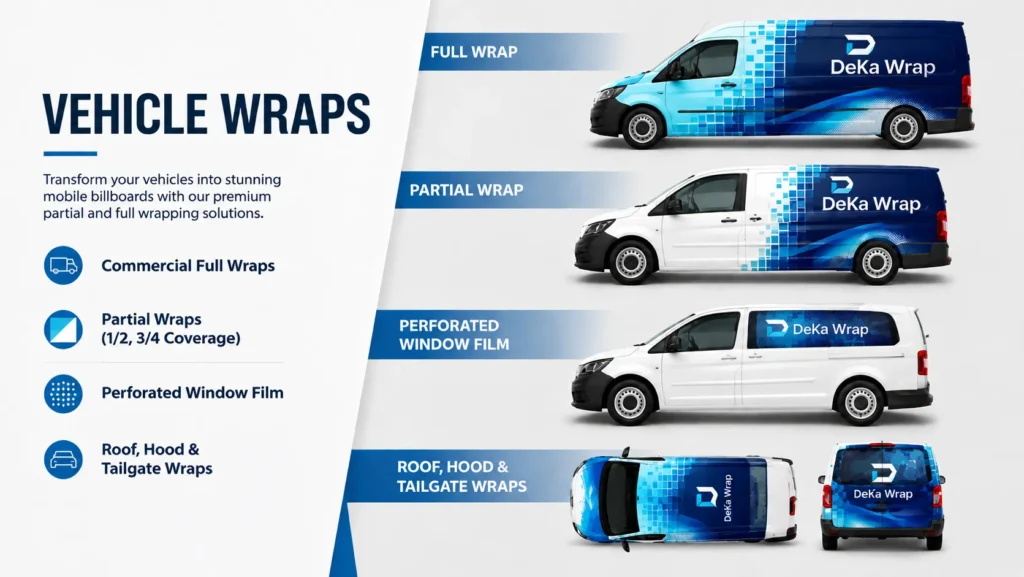
Full Vehicle Wrap
A full wrap covers most visible painted surfaces and provides maximum branding space. It is commonly used when companies want a complete fleet identity.
However, it requires more vinyl material and installation time, making it the higher-cost option.
Partial Wrap
A partial wrap uses selected areas of the vehicle while incorporating the original paint color into the design.
For companies with limited budgets, partial wraps can provide a professional appearance at a lower cost.
Decals and Basic Graphics
Simple logos, contact information, or cut vinyl graphics are the most budget-friendly option. They provide essential branding but offer less visual impact compared with larger wrap designs.
Choosing the right level of coverage is one of the easiest ways to control fleet graphics costs.
How to Create a Realistic Fleet Wrap Budget
A good fleet wrap budget should include more than just the vinyl price.
Consider these categories:
- Design Costs
Professional design ensures that your branding works correctly across different vehicle shapes.
For fleets, a scalable design is especially important. The same branding system should work on vans, trucks, and other vehicles without requiring completely different artwork for every model.
- Materials
Vinyl quality directly affects durability, appearance, and replacement frequency.
Lower-cost materials may reduce the initial investment but can require earlier replacement due to fading, shrinking, or reduced adhesion.
Choosing reliable vinyl designed for commercial applications can help reduce long-term maintenance costs.
- Installation
Professional installation is a significant part of the total cost.
Experienced installers understand how to handle:
Vehicle curves
Seams and edges
Door openings
Complex body panels
Poor installation can lead to lifting edges, bubbles, and premature repairs.
- Vehicle Preparation
Before installation, vehicles usually need to be cleaned and inspected.
Extra preparation may be required if vehicles have:
Dirt buildup
Wax or coating residue
Damaged paint
Surface repairs
Including preparation costs in your initial budget prevents unexpected expenses later.
Practical Ways to Reduce Fleet Wrap Costs
A professional fleet wrap project does not always require the most expensive option. Several strategies can help businesses control costs.
Choose Partial Wraps for Smaller Budgets
A well-designed partial wrap can still create strong brand recognition while reducing material and installation costs. Many businesses start with partial wraps and expand their branding as their fleet grows.
Standardize Your Fleet Design
Using one consistent design across multiple vehicles can reduce design expenses and simplify production. A flexible template allows your branding to adapt to different vehicle models while maintaining a consistent appearance.
Wrap Vehicles in Batches
If you have multiple vehicles, completing them together may reduce setup time and improve project efficiency. Discuss fleet pricing options with your wrap supplier when planning multiple vehicles.
Avoid Choosing Materials Based Only on Lowest Price
The cheapest option may not always provide the best value. Replacing damaged or faded wraps more frequently can increase your total cost over time. Selecting durable commercial-grade vinyl can help improve the lifespan of your investment.
Is Fleet Wrap Advertising Worth the Investment?
Fleet wraps are often described as “mobile billboard advertising” because company vehicles can display branding while traveling, parked at customer locations, or operating in local communities.
However, the value of fleet wraps depends on your business goals, vehicle usage, and target customers.
Fleet wraps may be especially useful for businesses that:
Have vehicles traveling frequently in public areas
Serve local customers
Want consistent brand visibility
Need a professional appearance across their fleet
Instead of viewing wraps as a one-time advertising expense, many companies consider them a long-term branding investment.
Choosing the Right Fleet Wrap Partner
Selecting the right supplier is an important part of staying within budget. A reliable fleet wrap provider should help you understand:
- Material options
- Expected lifespan
- Installation requirements
- Maintenance considerations
- Total project costs
At Deka Wrap, we provide commercial-grade vinyl solutions designed for business vehicles, including fleet vehicle wraps, vinyl wrap for business cars, and custom fleet branding projects.
Our goal is to help businesses choose practical wrap solutions based on their vehicles, branding needs, and budget requirements.
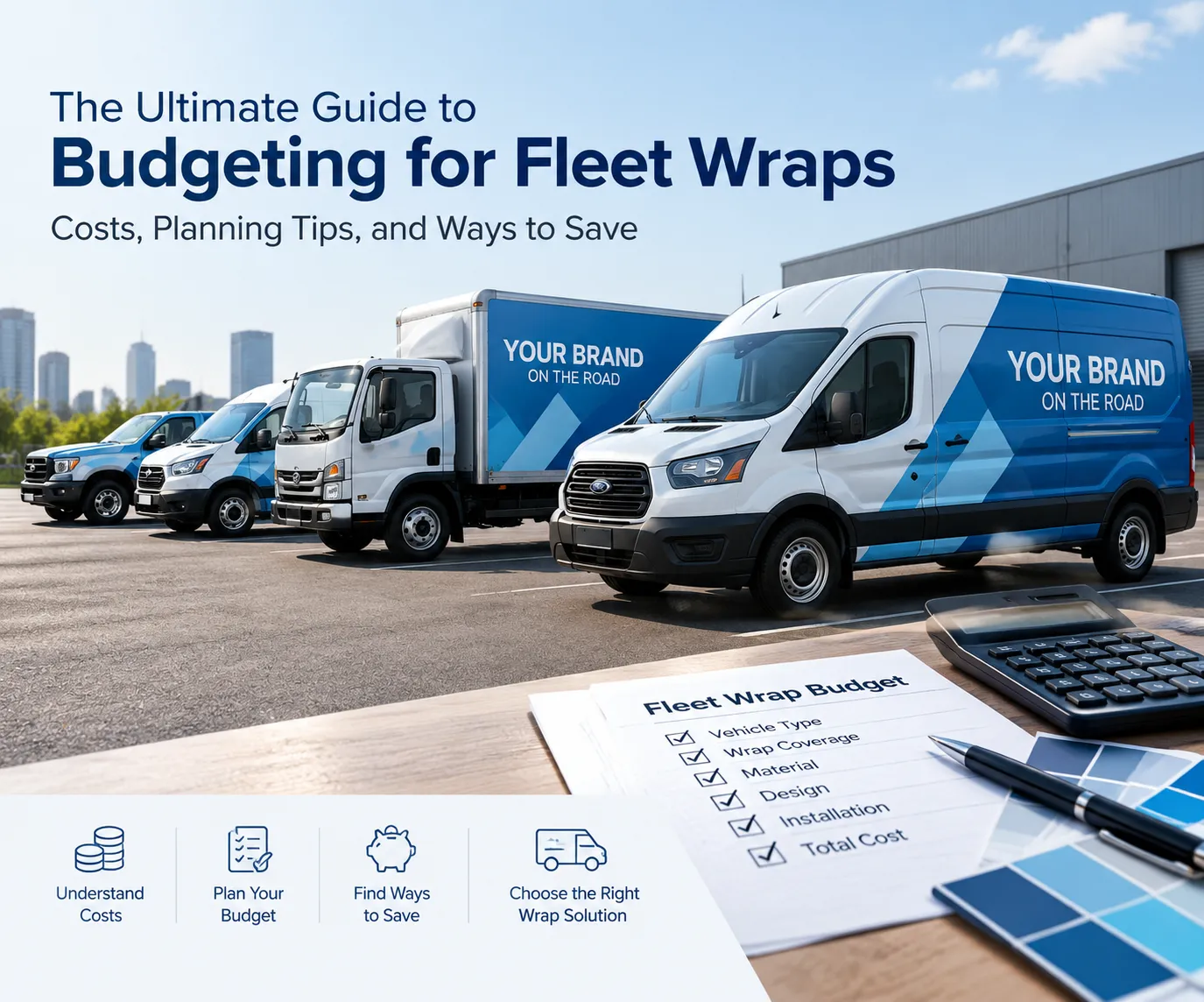
Final Checklist Before Starting Your Fleet Wrap Project
Before approving your project, consider:
✓ How many vehicles need wrapping?
✓ Do you need full wraps, partial wraps, or decals?
✓ What is your expected budget per vehicle?
✓ How long do you need the wraps to last?
✓ Does the design work across different vehicle models?
✓ Have you included design, installation, and preparation costs?
A clear budget helps you make better decisions and ensures your fleet graphics investment delivers long-term value for your business.
Contact Deka Wrap to discuss your fleet wrap requirements and receive a customized project estimate.