A well-designed Ford Transit food truck wrap can turn an ordinary mobile kitchen into a recognizable local brand. For food entrepreneurs, the vehicle is not simply transportation—it is the storefront, menu board, social-media backdrop, and first impression all in one. With the right Ford Transit wrap, clear Transit food truck graphics, and consistent food truck branding, a business can attract attention before customers even see the menu.
Why a Ford Transit Food Truck Wrap Matters
Ford Transit vans are a popular foundation for mobile food businesses because they are practical, adaptable, and available in several body sizes. But in a crowded street-food market, a standard white or silver van can easily blend into traffic.
A professional wrap solves that problem. It gives the business a distinctive visual identity that works wherever the van parks: outside office buildings, at festivals, near schools, at private events, or on busy city streets.
The strongest wraps do three things:
- Make people notice the truck from a distance.
- Help customers understand the food concept within seconds.
- Give customers a memorable name, image, or social-media handle to search later.
For many operators, the wrap becomes one of the most visible long-term marketing investments they make.
Ford Transit commercial vans offer flexible configurations for businesses that need a practical mobile-food platform. Explore Ford Transit commercial vehicles before planning your conversion and wrap layout.
A Case-Based Branding Approach for a Mobile Food Business
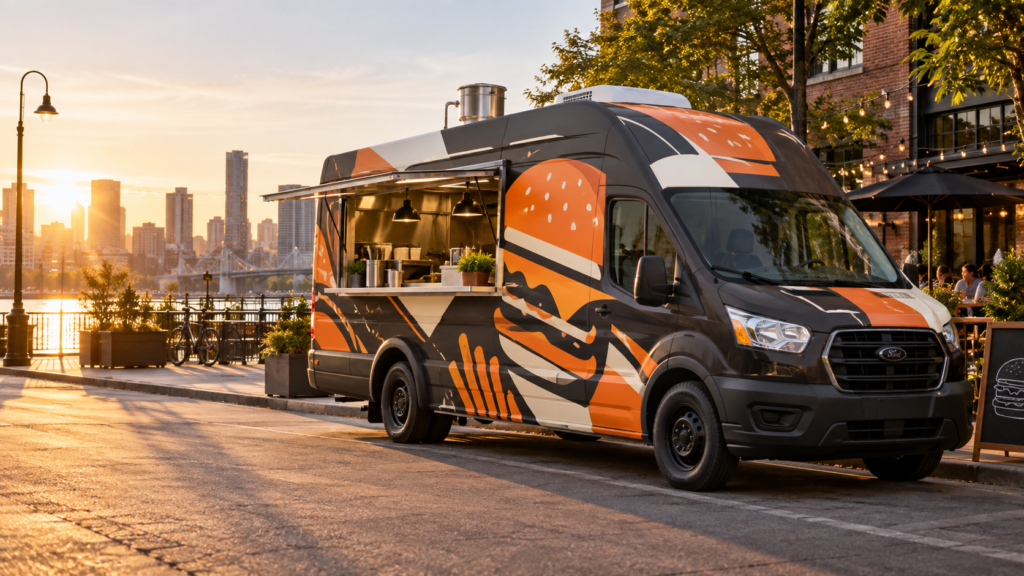
Imagine a new gourmet burger business launching from a Ford Transit. The owner has excellent food, reliable equipment, and a strong local recipe—but no established brand presence yet.
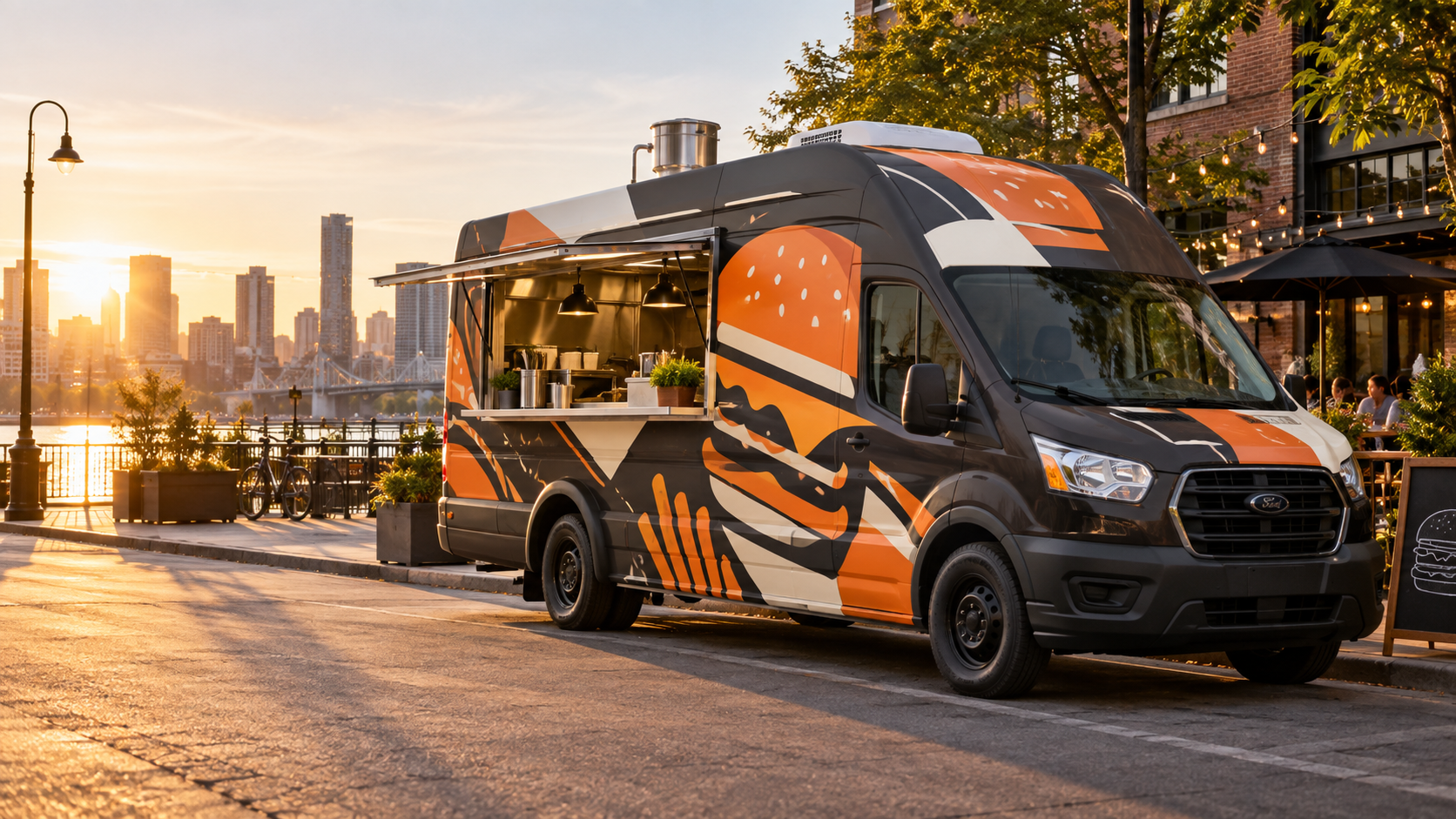
Instead of treating the van as a simple kitchen on wheels, we would treat it as a moving billboard. The goal is to create a bold, appetizing, and easy-to-recognize identity that works whether the vehicle is parked or driving through town.
For this concept, the wrap strategy could include:
- A dark charcoal background for a premium street-food feel.
- Oversized burger photography or custom illustration on both side panels.
- A bright accent color, such as mustard yellow or flame orange, to create visibility.
- The business name in large lettering above the serving window.
- A short positioning line, such as “Smash Burgers. Big Flavor.”
- Instagram, QR code, website, and ordering information positioned near the rear section.
This approach makes the brand clear from several viewing distances. From far away, people see the color and logo. From nearby, they see the food imagery and message. When waiting in line, they can find the menu, social accounts, and ordering details.
Choose a Design That Matches the Food
The design should reflect what customers can expect to eat. A premium coffee van, a Mexican taco truck, a healthy bowl business, and a dessert trailer should not look the same.
For example:
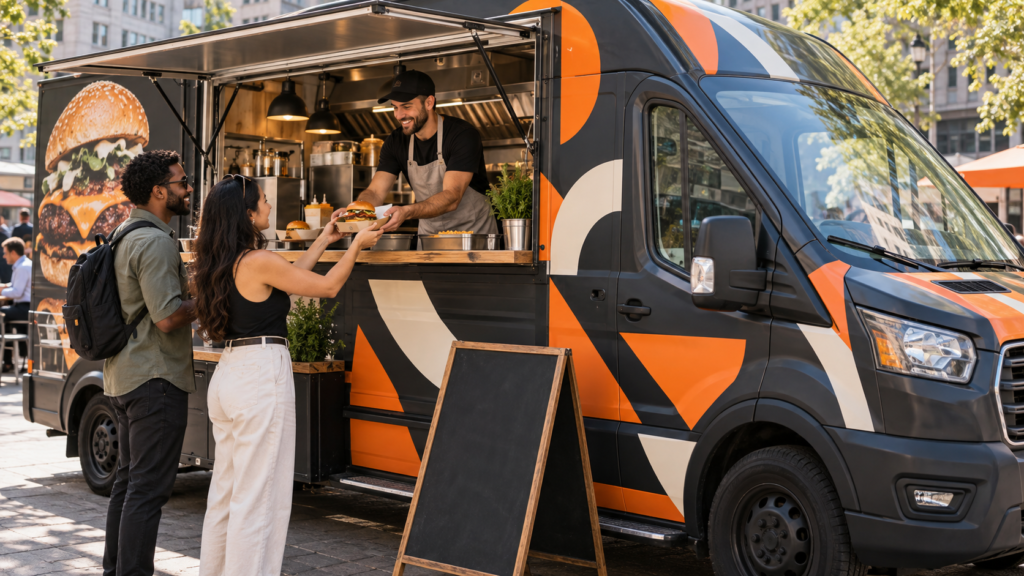
Street Food and Burgers
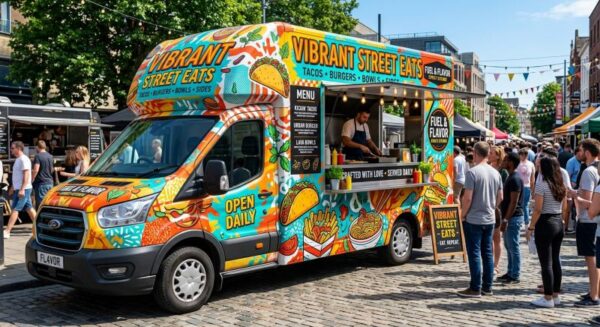
Use strong contrast, oversized food visuals, bold typography, and energetic colors. Red, orange, yellow, black, and white often perform well because they are associated with appetite, speed, and energy.
Coffee and Specialty Drinks
Use a more refined approach with warm neutrals, dark green, brown, cream, or black. A clean logo, simple illustrations, and well-spaced typography can create a premium café feeling.
Tacos, Mexican Food, and Latin Cuisine
Bright colors, custom patterns, hand-painted illustration styles, and expressive type can create an energetic and welcoming identity. However, avoid making the design too busy—customers should still be able to read the brand name quickly.
Healthy Food, Smoothies, and Vegan Concepts
Fresh greens, natural textures, clean white space, fruit or ingredient imagery, and simple icons can communicate freshness and quality. The visual language should feel modern, not clinical.
The best food truck branding is not just attractive. It helps people instantly understand the food category, price positioning, and personality of the business.
Key Areas to Use on a Ford Transit Wrap
A Ford Transit offers several valuable branding surfaces. Every panel should have a purpose.
Side Panels
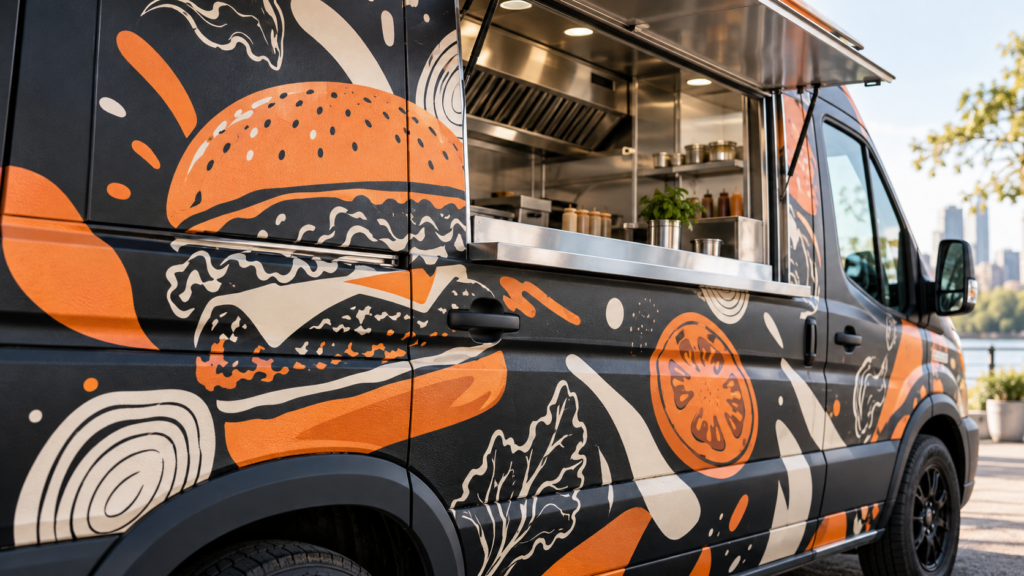
The side panels are usually the most important areas for Transit food truck graphics. Use them for the logo, main food imagery, brand colors, and key message. Large text is essential because people may see the van while walking, driving, or standing across the street.
Serving Window Area
The serving window is where branding becomes part of the customer experience. Keep this zone clean and easy to read. The brand name, menu highlights, ordering instructions, and payment icons can all work well here.
Avoid covering this area with too much visual detail. Customers need to see staff, products, and menus clearly.
Rear Doors
The rear of the van is valuable because it is visible in traffic. Add a bold logo, website, phone number, QR code, or short social-media message. A line such as “Follow us for today’s location” can encourage repeat engagement.
Hood and Roof
The hood can carry a logo or icon, especially if customers approach the vehicle from the front. For event operators, roof graphics may also be useful where the truck is viewed from upper floors, balconies, or drone photography.
Make the Brand Readable in Three Seconds
One of the most common mistakes in a Ford Transit food truck wrap is trying to say too much. A vehicle wrap is not a brochure.
A person should be able to understand these three points almost immediately:
- What is the business called?
- What food or drink does it sell?
- How can they find or order from it?
If the answer is hidden behind too many words, small images, or competing colors, the design will lose impact.
A useful rule is to prioritize information in this order:
- Brand name
- Food category or hero product
- Tagline or key benefit
- Social handle, website, QR code, or phone number
Menu details, full ingredient lists, and long business descriptions should stay on a menu board, website, or QR-linked ordering page.
Use Food Photography Carefully
Food photography can be powerful, especially for burgers, pizza, fried chicken, desserts, tacos, and loaded fries. High-quality images create appetite and can make the vehicle instantly recognizable.
However, poor photography can have the opposite effect. Dark images, low-resolution files, overly edited food, or generic stock photos can make a brand look less trustworthy.
If using photography, choose one or two hero products and print them at a large scale. The visual should be sharp, colorful, and consistent with what customers will actually receive.
For brands without professional food photography, custom illustration is often a better choice than weak images. A strong illustrated mascot, ingredient pattern, or signature icon can become a memorable part of the brand.
For material selection, consult a professional installer and review 3M vehicle graphics solutions to understand available wrap-film options.
Build Consistency Beyond the Vehicle
The most successful Ford Transit wrap designs are part of a larger branding system. The same colors, logo, fonts, and graphic elements should appear across every customer touchpoint.
This can include:
- Menus and price boards
- Staff uniforms and aprons
- Packaging and takeaway bags
- Social-media posts
- Website and online ordering pages
- Event banners and flags
- Loyalty cards or promotional stickers
When the vehicle, packaging, and online channels look connected, the business appears more established and professional. Customers are also more likely to remember it after the first visit.
Practical Wrap Design Tips
Before approving a design, check the following:
- Use large, readable text with strong contrast.
- Keep important details away from door seams, handles, lights, and body contours.
- Design around the serving window rather than treating it as an obstacle.
- Use durable, professional vehicle-wrap materials suitable for outdoor exposure.
- Confirm that the design works from both close range and across a street.
- Include the social-media handle or QR code, but make sure it is large enough to scan.
- Use a consistent visual style on both sides of the van.
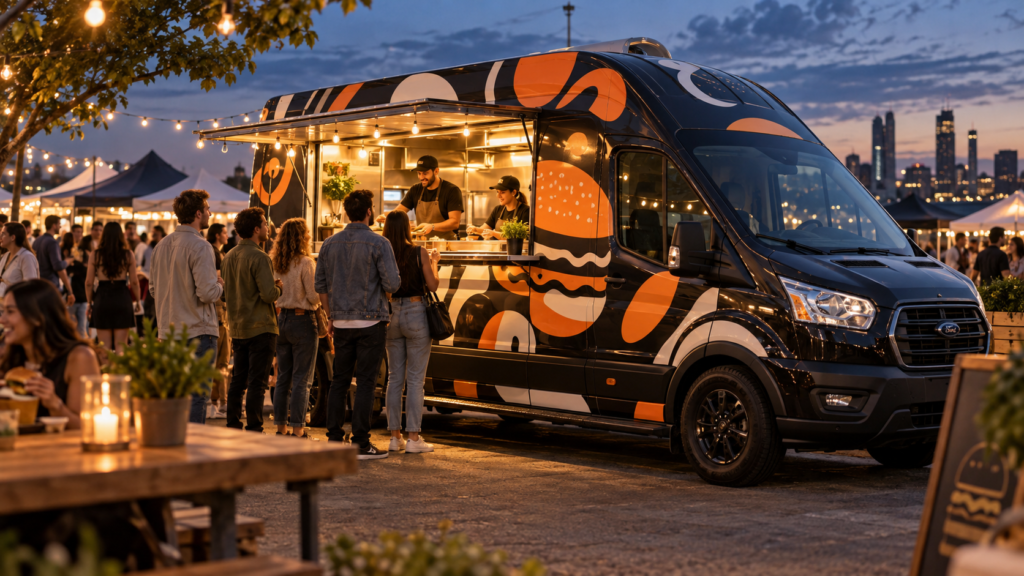
A great design should still look professional when the vehicle is parked in rain, photographed at night, or seen from a moving car.
Final Thoughts
A Ford Transit food truck is a business on wheels, and its appearance directly affects how customers perceive the food inside. A professionally planned Ford Transit food truck wrap creates visibility, builds trust, and gives customers a reason to stop, photograph, share, and return.
The right combination of bold color, clear messaging, appetizing imagery, and thoughtful food truck branding can turn a practical Transit van into a memorable mobile restaurant. Whether the business serves coffee, tacos, burgers, desserts, or fresh healthy meals, well-designed Transit food truck graphics help the brand stand out wherever the road leads.